Mandarin Oriental
Punta Negra
Mallorca
The challenge
A resort is not a single brand surrounded by services. It is an ecosystem of experiences, moments and businesses that must be capable of generating value independently while, at the same time, building a shared perception. This was the premise from which we approached our work for Mandarin Oriental Punta Negra.
The project presented a particularly interesting challenge. On the one hand, Mandarin Oriental is one of the world’s leading hospitality brands, with a highly distinctive global identity and a strategy clearly focused on increasing brand desirability, enriching the guest experience and ensuring that each property expresses the essence of its destination. On the other, Punta Negra is located in Mallorca, a place with an extraordinarily powerful identity, recognised around the world and, precisely for that reason, also saturated with familiar codes: the Mediterranean, the sea, light, authenticity, local produce, nature, calm.
More than F&B: a tool for building value
At a resort of this level, F&B cannot be understood simply as a service attached to the stay. It is one of the areas with the greatest potential to extend the relationship with the guest, create additional consumption occasions, attract non-resident audiences, encourage repeat visits and build reasons to come to the property that go beyond the room itself. That changed the way we interpreted the brief.
We were not working on “the all-day dining”, “the garden bar”, “the pool bar” or a series of complementary experiences. We were working on resort assets with the potential to build their own identity, reputation and power of attraction.
There was, however, an important tension to resolve. If every concept was absorbed into the hotel brand, they risked functioning merely as internal services. If, on the other hand, they were built as completely independent brands, the overall experience could become fragmented and the value of belonging to Mandarin Oriental Punta Negra diluted. The strategic question therefore went far beyond developing names and identities:
A Hospitality Brand Balance perspective
Our Hospitality Brand Balance model allowed us to address that question through four dimensions which, in hospitality, never operate in isolation.
-
Economy: Our first reading was a business one. Each concept needed to justify the role it could play within the overall performance of the resort and the behaviours we wanted the brand to help facilitate.
Leppoc needed to turn a high-frequency space operating across multiple dayparts into a recognisable proposition, preventing the all-day dining from becoming simply a choice of convenience. Sobretaula could transform dwell time and the transition between moments of the day into a distinct consumption occasion. Thalos had the potential to move beyond the role of an amenity and become a driver of attraction, programming and collaboration with other brands. Castaway could extend the product beyond the physical boundaries of the resort and create higher-value experiences.
The brand needed to create the conditions for each asset to be communicated, recommended, booked, programmed and developed with greater clarity.
-
Emotion: Hospitality begins before we arrive. It begins when we are able to imagine how a place will make us feel.
A category such as “pool bar” describes a function. A name, a story and a distinctive universe can create expectation. And that expectation is part of the value.
The aim was for guests not simply to remember where they had breakfast, had a drink or spent the afternoon, but to remember Leppoc, Sobretaula or Thalos. For each space to carry enough meaning to become part of the memory of the trip, and enough personality to be recommended by name.
Services are used. Brands are chosen, remembered and recommended.
-
Environment: Mallorca was one of the project’s greatest assets and, at the same time, one of its main risks.
The codes associated with the island are deeply embedded in the international imagination and, for that very reason, extremely easy to turn into clichés. The opportunity was not to create brands that felt “more Mallorcan”, but to identify elements of the destination capable of shaping a distinctive experience: the light and the way it transforms throughout the day, the physical relationship with the sea, vegetation, stone, daily rhythms, particular words and social rituals, the Mediterranean way of sharing time, and the possibility of making the landscape an active part of the product.
Understanding the environment did not mean imposing a literal local interpretation on every concept either. Punta Negra is deeply rooted in Mallorca, but it is also part of a broader Mediterranean culture, shared across different shores through light, materiality, landscape, sociability and a particular relationship with time and the sea. This framework allowed us to work directly from the local context where it added distinctiveness, while opening up the perspective when the experience itself called for it.
-
Equilibrium: The real challenge lay in holding several tensions in balance at the same time: global brand and local expression; autonomy and belonging; sophistication and naturalness; international guest and external audience; consistency and diversity; desirability and functionality.
First, define the job each brand needed to do
Not every experience within a hotel needs to become a standalone brand. It only makes sense when having its own name, promise and system helps create choice, differentiation, communication potential or commercial value.
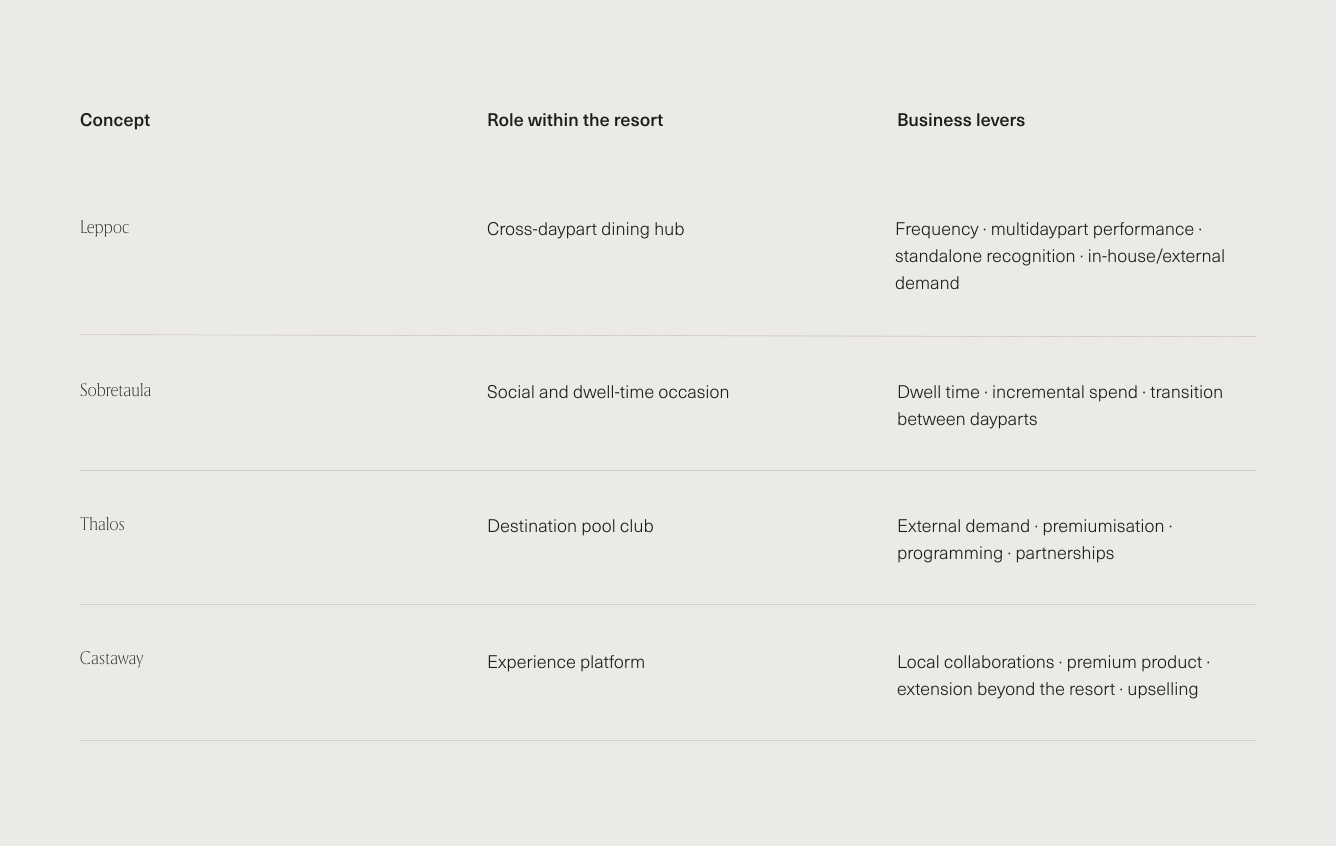
The table captures one of the central ideas behind the project: the four brands were not intended to compete by performing the same role. Their value also lay in their complementarity. One works on frequency and cross-daypart relevance; another on dwell time; another on attraction, programming and premiumisation; and another on extending the product and creating higher-value experiences.
In this way, the brand system helps address different stages of the guest journey, social intensities, audiences and consumption occasions. Identity comes afterwards, as a consequence of first defining the role of each asset.
An architecture with autonomy, but not independence
Mandarin Oriental brings something none of these brands needs to build from scratch: international reputation, trust, service standards and belonging to a highly recognisable hospitality universe.
The objective, therefore, was not to create small brands competing with the masterbrand, but concepts with enough personality to generate desire in their own right while remaining clearly connected to Mandarin Oriental Punta Negra.
From an architecture perspective, the system follows an endorsement logic: the masterbrand provides reassurance, legitimacy and standards; the F&B brands provide specialisation, character and the ability to generate choice. The degree of autonomy does not need to be identical in every case, because it responds to the role of each individual asset.
This allows someone to specifically want to go to Thalos, dine at Leppoc or stay longer at Sobretaula, while their ultimate relationship remains with Mandarin Oriental Punta Negra.
Savour the soul of the island
We then needed to find an idea capable of creating coherence across the ecosystem without forcing every brand to look alike. This led to Savour the soul of the island, the strategic territory establishing a shared way of interpreting the destination.
The intention was not to show Mallorca, but to make it felt. Through light. Time. The way people come together. The coast. The landscape. Materials. Rhythm.
Each concept needed to begin with Punta Negra and its relationship with the island, but did not necessarily need to represent it in the same way. Some could do so through a deeply local ritual; others through light, landscape or rhythm; while others could open that perspective towards a broader Mediterranean imagination. Coherence would not come from repeatedly using Mallorcan codes, but from sharing a particular sensitivity to place.
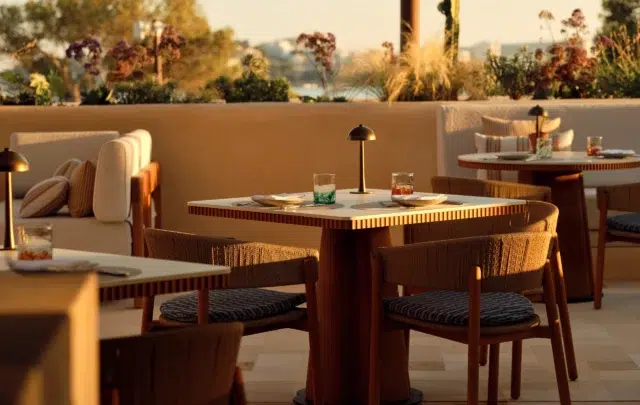
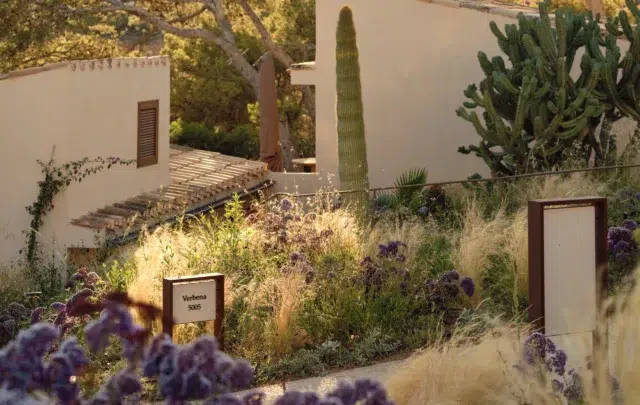
Leppoc. When flavour follows the light.
The all-day dining presented a very specific challenge. A space that operates from early morning until night can end up being suitable for every moment and, precisely because of that, truly belong to none of them.
We decided to turn that transformation throughout the day into its defining characteristic.
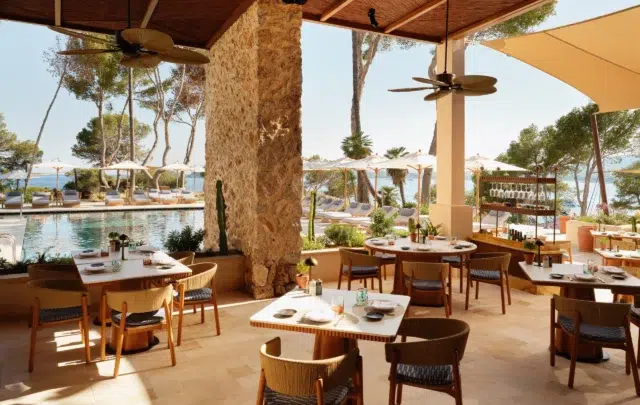
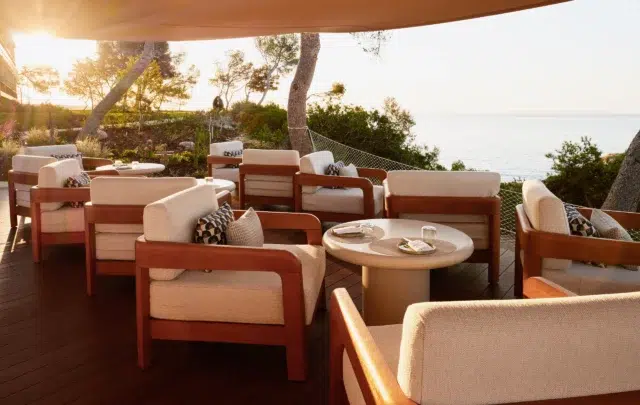
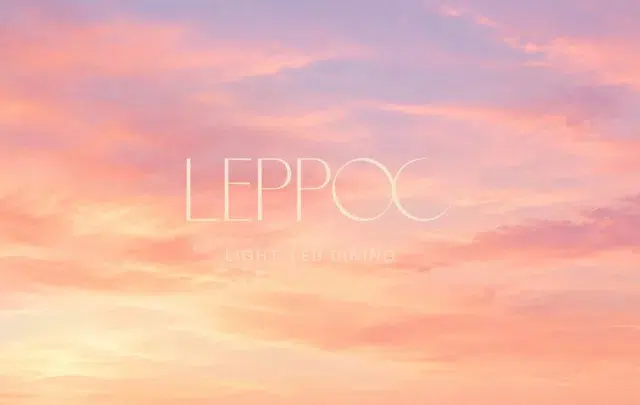
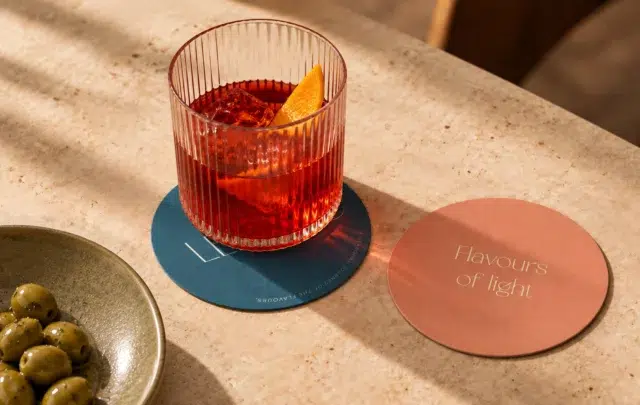
In Mallorca, light is far more than a landscape attribute. It changes the sea, the stone, the architecture, the colours, the temperature and the way we inhabit spaces. At Leppoc, that evolution becomes the structure of the experience: from the first glow of morning to the last light of the day, the atmosphere, rhythm and perception of the table all change.
The name connects with the ideas of time, season and moment. Its sound recalls l’époque, while retaining an identity open and international enough to accompany a Mediterranean proposition enriched by Levantine influences.
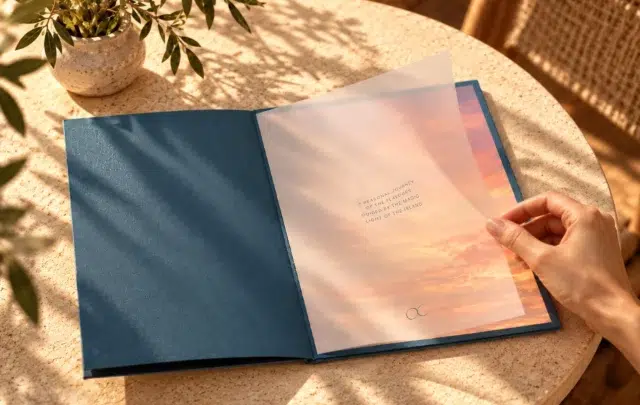
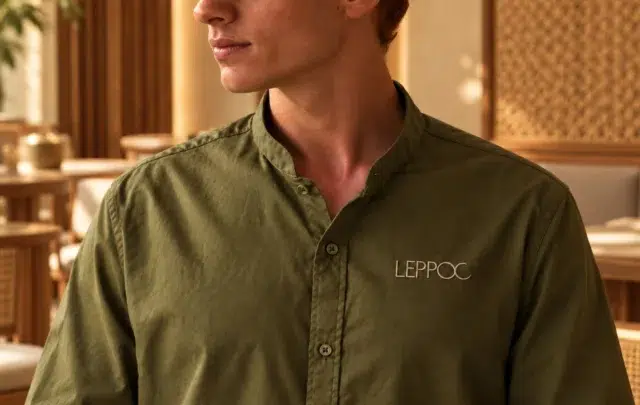
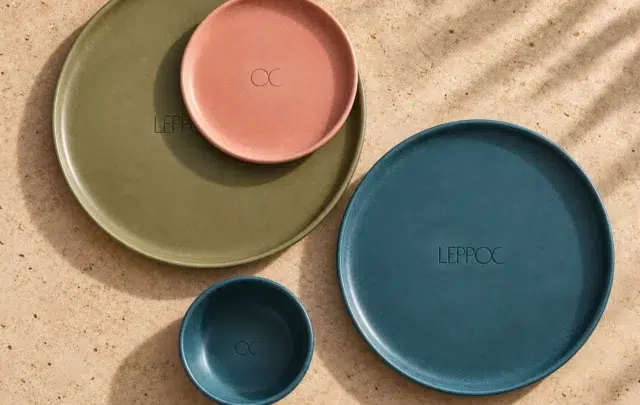
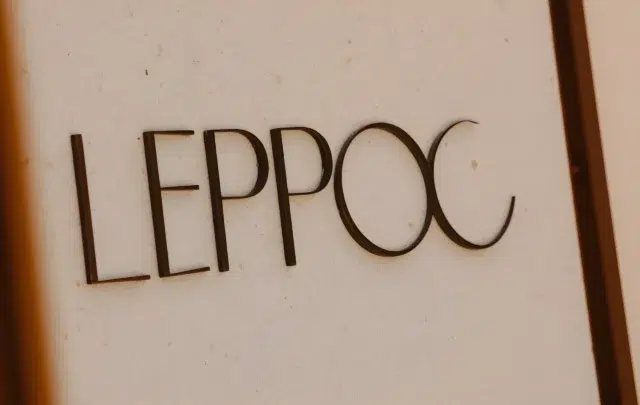
The visual identity takes the same idea into the graphic system. The connection between the letters O and C represents the transition between sun and moon; typographic contrasts introduce the behaviour of light and shadow; the colour palette draws from the sea, coral, olive and sand; while materials and transparency allow light itself to become part of the applications. Design does not simply illustrate the concept: it makes it visible and usable.
From a business perspective, Leppoc gives standalone recognition to a high-frequency asset operating across multiple dayparts, strengthening its ability to communicate independently and turning the all-day dining into a proposition that can be chosen for more than simply its convenience within the hotel.

Sobretaula. The value of staying.
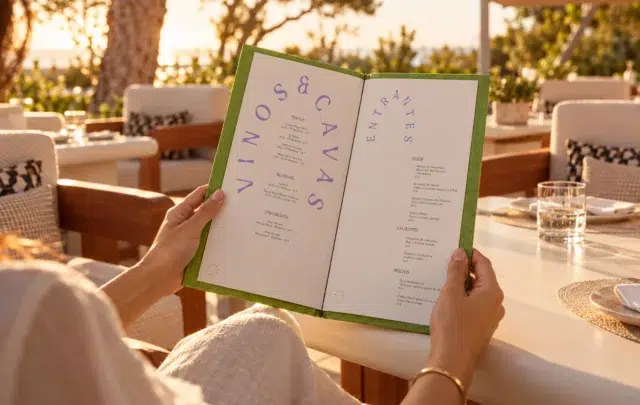
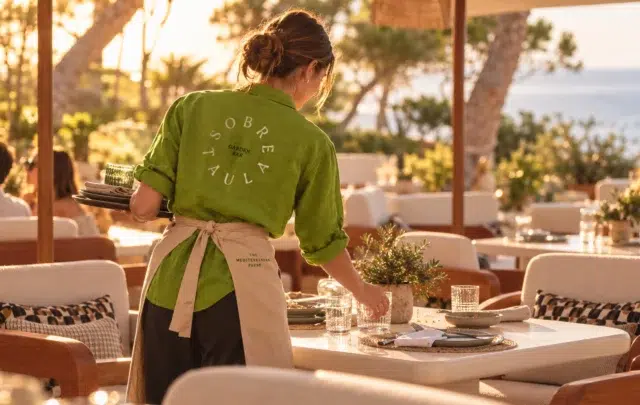
In the Garden Bar, we found another way to interpret the destination, one less connected to landscape and much more rooted in a Mediterranean relationship with time.
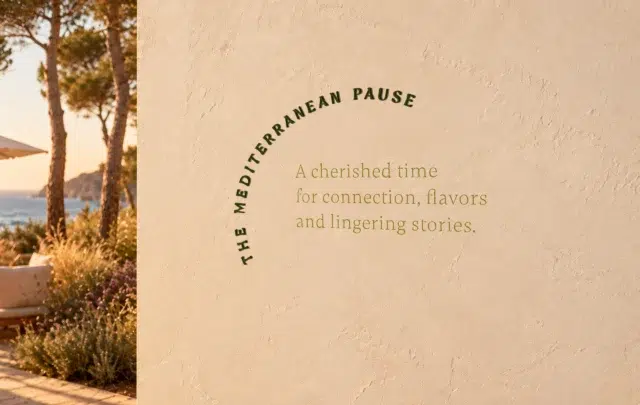
The word sobretaula describes that moment when the meal has finished but nobody wants to leave the table yet. The glasses remain, the conversation continues and, for a while, the clock loses its importance.
The concept transforms the product. We are no longer simply talking about a bar in a garden, but about a place whose proposition also lies in extending the moment.
And this idea has a very tangible business dimension. Creating a recognisable moment within the guest journey helps increase dwell time, creates an additional consumption occasion that may not previously have existed as such, and transforms the transition between dayparts into an experience with an identity of its own.
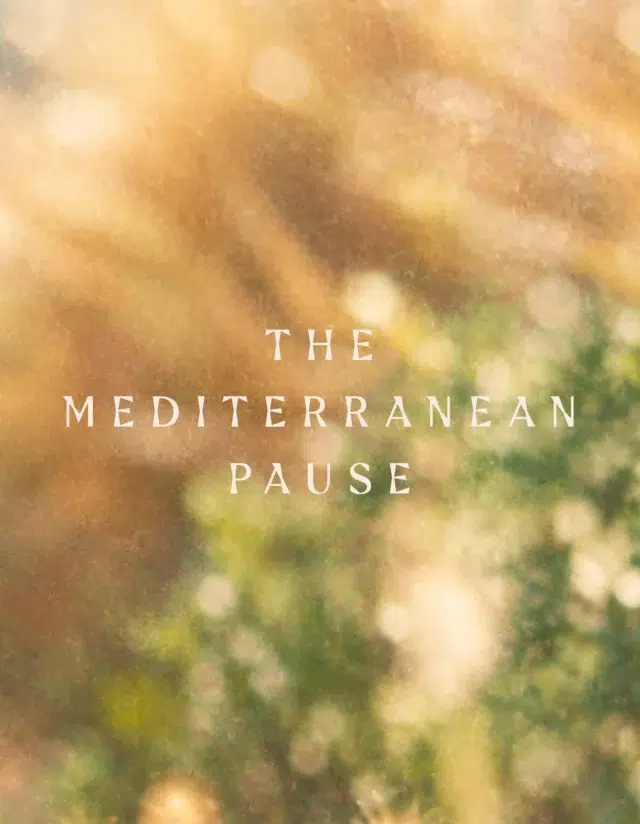
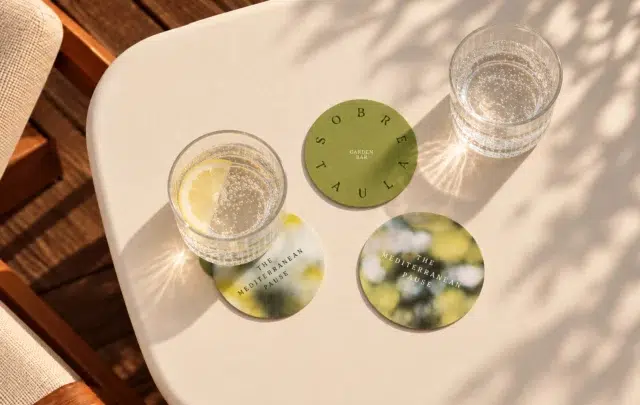
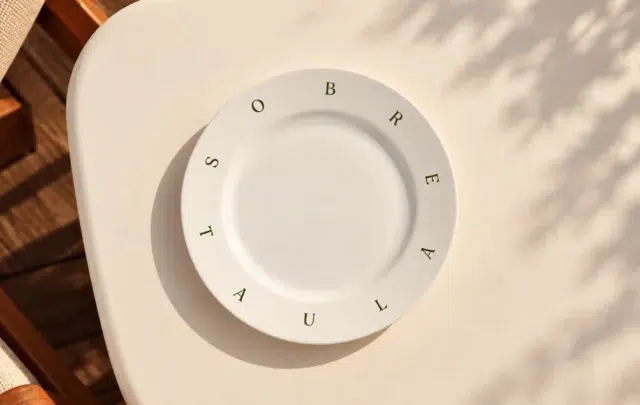
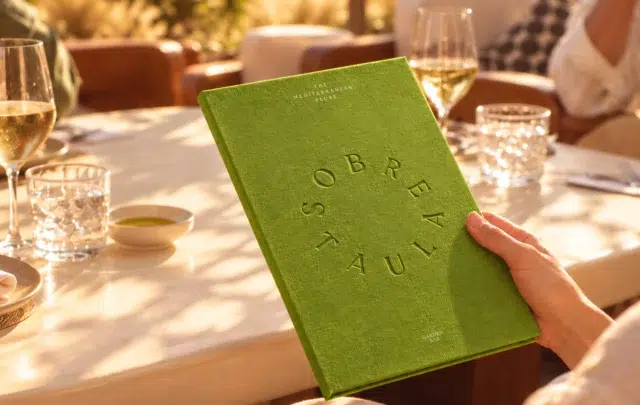
The visual identity translates that same feeling. The logotype works with the idea of conversation and gathering around a table; typographic contrasts evoke the play of light and shadow in the garden; greens, stone tones and floral accents emerge from the surroundings; while negative space plays an important role in the compositions, introducing pause and room to breathe.
Photography does not make the garden the absolute protagonist either. The landscape accompanies the experience. What matters happens between people.
Sobretaula therefore connects with Mallorca and the Mediterranean through something far more difficult to replicate: a particular way of being together.
Thalos. The Mediterranean as an attitude.
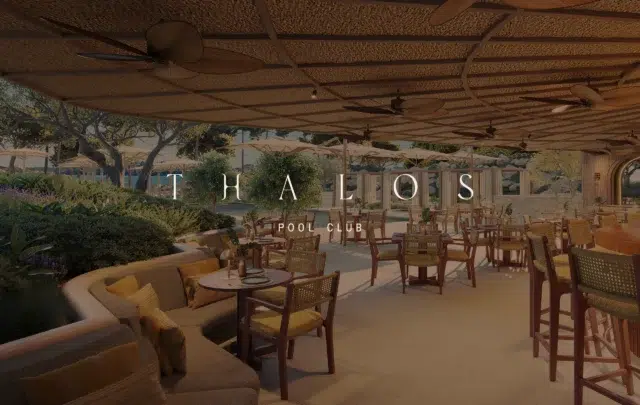
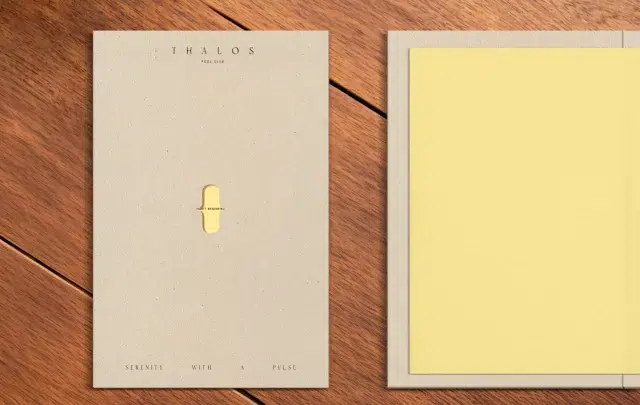
Thalos began with a different ambition. The opportunity was not to create an attractive identity to accompany a swimming pool, but to build a concept capable of behaving as a destination within the resort itself.
A place relevant to hotel guests, but also with the potential to attract an external audience, generate a social life of its own, create programming and become a platform for collaborations and activations with other brands.
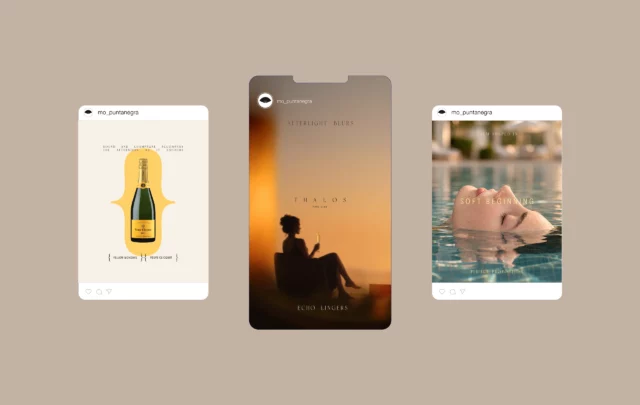
This required moving away from the most predictable codes of the Mediterranean beach club. We were not looking for noise, display or an energy built around spectacle, but for a more restrained sophistication: a place whose intensity could build throughout the day without ever losing its sense of calm.
A serenity that does not imply stillness and an energy that does not need to make itself obvious. Sociability, rhythm and desire, always with a sense of restraint.
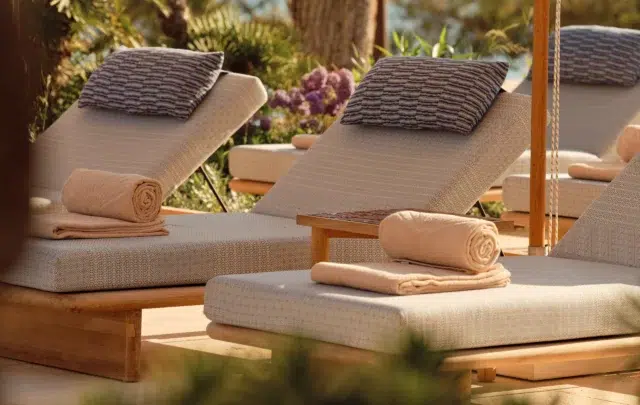
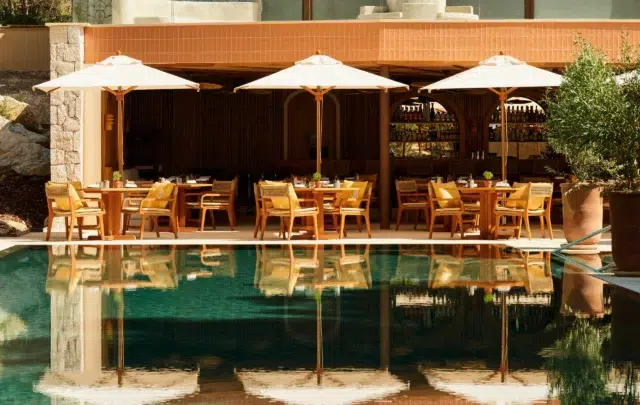
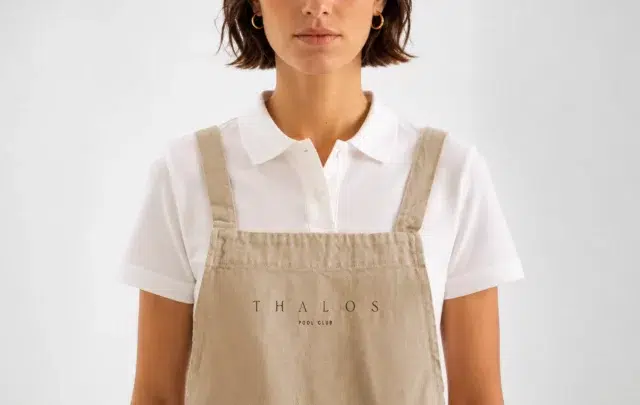
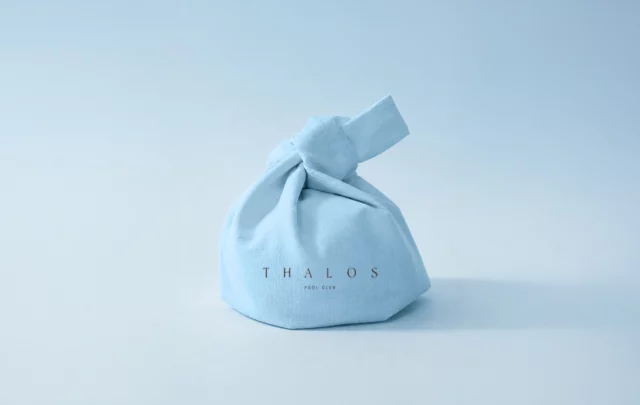
The Thalos universe extends this perspective towards the Eastern Mediterranean. Hellenic resonances appear in the name and in a sensibility inspired by the Greek Riviera: proportion, stone, salt, linen, shadow, horizon and a relaxed elegance that understands luxury through space, time and natural ease.
The intention was not to recreate Greece, but to introduce another expression of a shared Mediterranean culture. A more cosmopolitan reference for a concept that, because of its social vocation and its ability to attract non-resident guests, needed to build a distinctive and highly recognisable world of its own.
The Greek Riviera interested us precisely because of that attitude: elegance without excess, beauty through proportion, sensuality through materials, sociability without noise, and luxury understood as time, space and naturalness. A language that enters into dialogue with Mallorca from another point on the Mediterranean.
The identity also needed to solve a very specific business requirement. If Thalos was to act as a stage for collaborations, the brand needed to be recognisable enough to retain ownership of the experience while flexible enough to coexist with other visual universes.
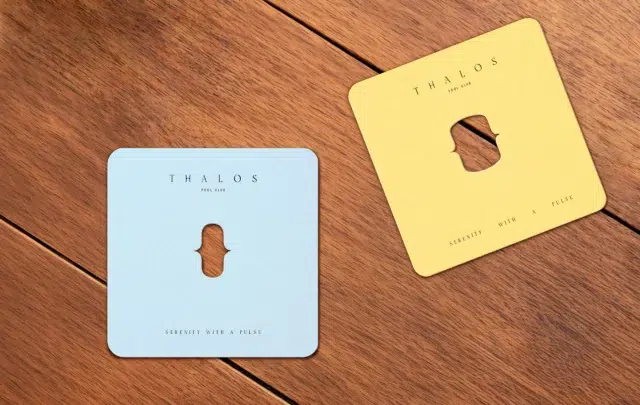
We therefore built a system that behaves more as a framework than as the protagonist. The logotype is based on a logic of containment and framing; proportions, margins and hierarchies are carefully controlled; the palette grows directly from the materials of the space, its architecture, furniture and textiles; and the graphic system can modulate intensity and colour according to the moment.
That flexibility is not a secondary aesthetic choice. It is an operational and commercial capability of the brand, allowing Thalos to host activations, campaigns or collaborations without having to rebuild its identity each time.
Thalos perhaps expresses one of the project’s core principles more clearly than any other concept: moving from having a pool bar to building a destination.

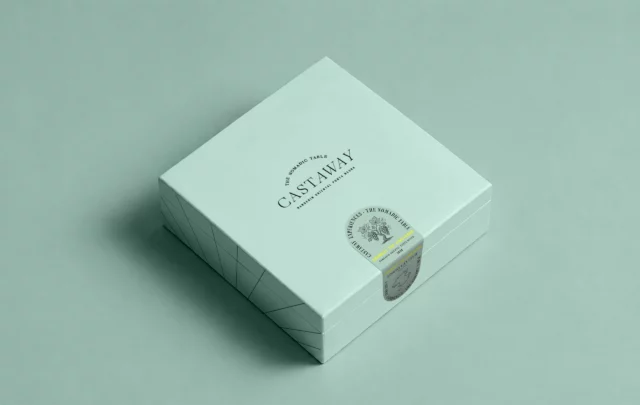
Castaway. When the hotel goes out to find the island.
Castaway takes the relationship with the destination one step further because it does not begin with a fixed physical space, but precisely with the possibility of doing without one.
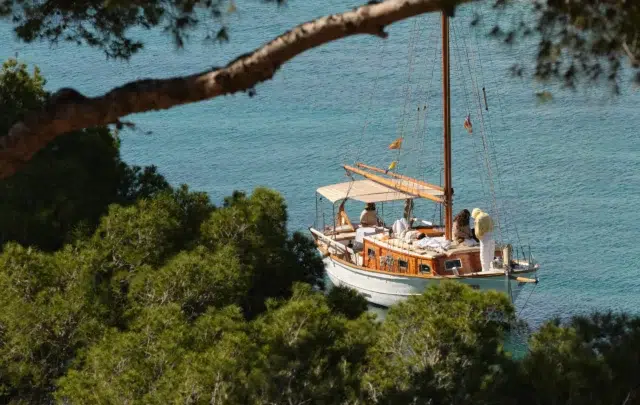
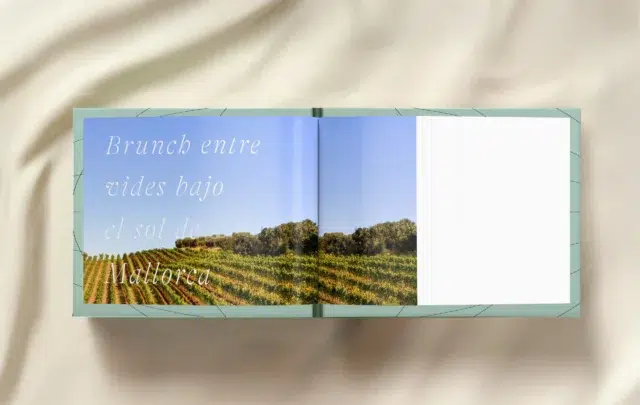
Dinner by the sea. A table among vineyards. Lunch beneath the pines. An encounter somewhere unexpected.
was born: a brand capable of moving without losing its identity, turning different Mallorcan landscapes into part of the Mandarin Oriental Punta Negra dining experience.
The business logic is particularly interesting. Castaway makes it possible to extend the product beyond the resort itself, build additional premium experiences, create new upselling opportunities and develop relationships with producers, estates, wineries, locations and other partners across the destination. The island stops being simply the context. It becomes part of the product.
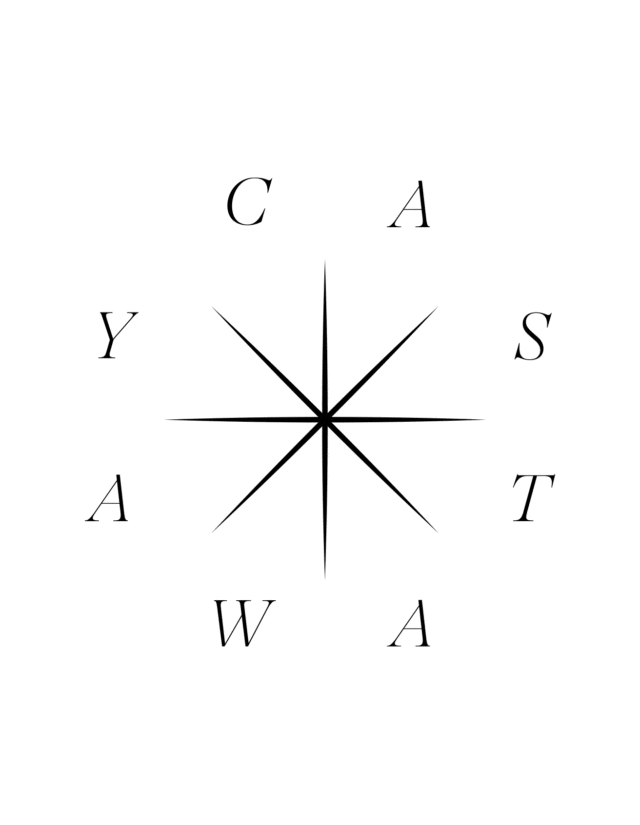
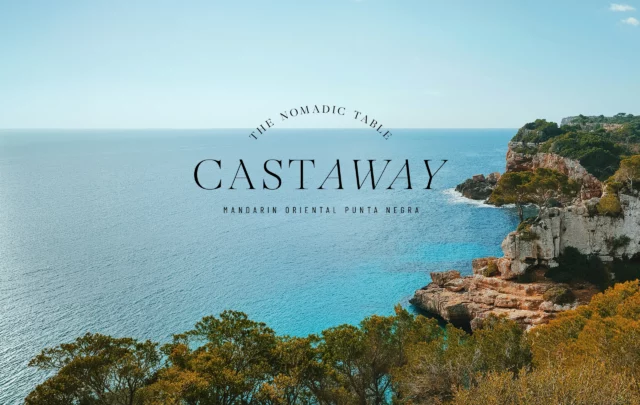
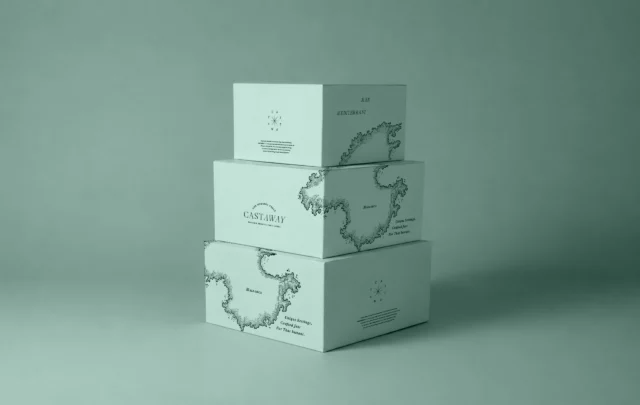
The visual identity draws from old cartography, coordinates, routes, travel stamps and open horizons. Each experience can incorporate its own location, illustration and narrative within a recognisable system, allowing the brand to grow through new settings without losing coherence. With Castaway, identity does not define the place. It connects it.
Four identities. One system.
A more conventional solution would have been to create an obvious visual family: the same typography, the same palette, the same resources, different names. It would have made it very easy to recognise that everything belonged to the same hotel. But it would also have made it much harder to believe that each experience had a different reason to be chosen.
We chose to build coherence at another level.
Leppoc, Sobretaula, Thalos and Castaway do not need to look alike because they do not perform the same function, belong to the same time of day or create the same expectation. What they share runs deeper: light, time, materiality, landscape, rhythm and the Mediterranean.
At Leppoc, light transforms time. At Sobretaula, time expands. At Thalos, energy is modulated. At Castaway, landscape becomes experience. Four different interpretations that belong to the same world.
Portfolio coherence does not require every brand to express the same degree of local specificity. Sobretaula is almost an exercise in local anthropology; Leppoc interprets a physical phenomenon of the island; Castaway works directly with the territory; Thalos builds a more cosmopolitan Mediterranean interpretation. Each plays a different role within the portfolio and therefore requires a different degree of direct connection to place.
From identity to business infrastructure
The result is not simply a collection of names, narratives and identities, but a system that helps Mandarin Oriental Punta Negra organise, differentiate and commercially enhance part of its F&B offering.